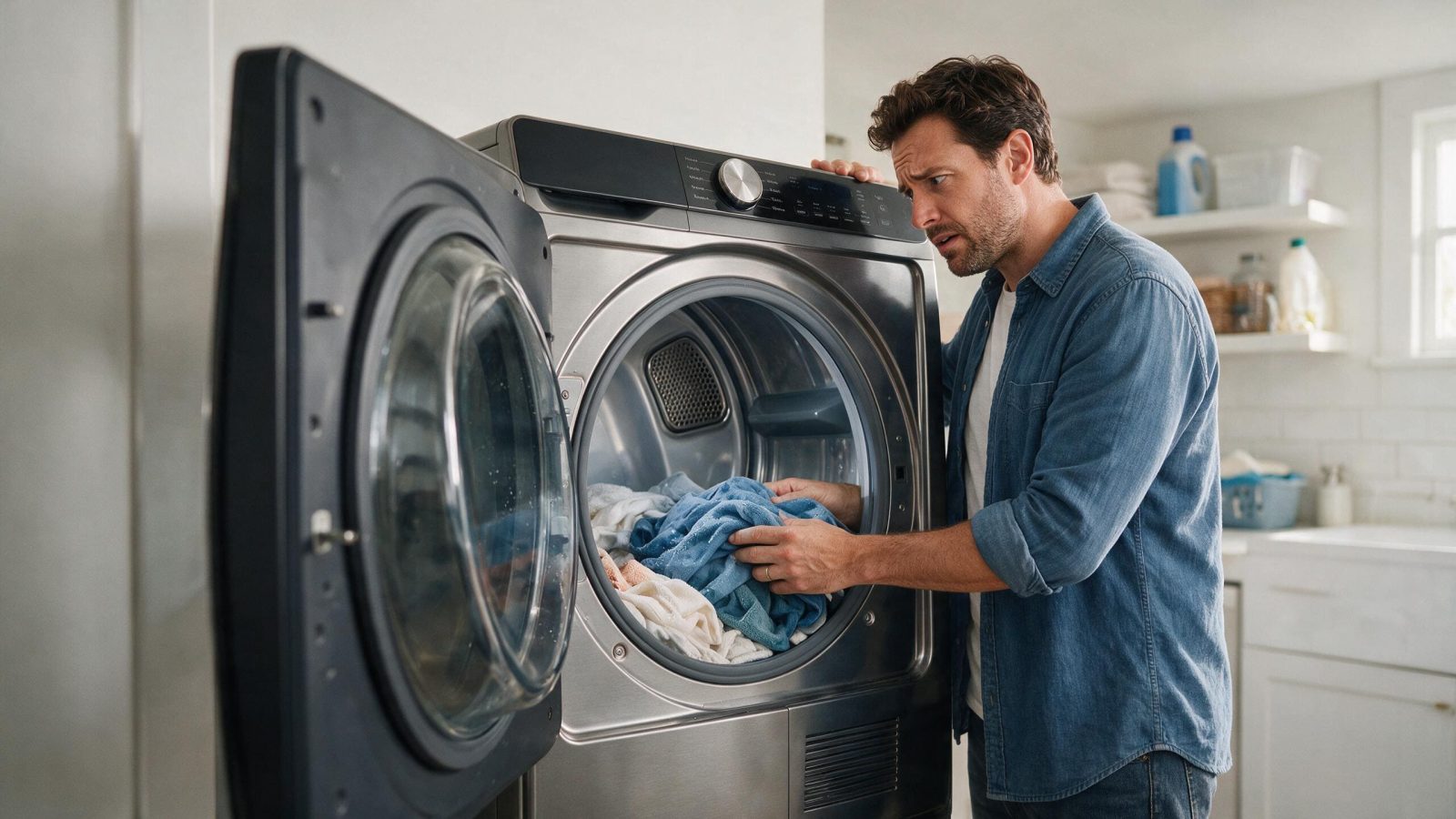
A Bosch dryer can tumble normally while heating or moisture-removal performance is abnormal. Separate drum movement from heat and airflow.
When a Bosch dryer drum turns but laundry stays cold or damp, check the program and the filters first. A turning drum only shows the drive is working, so a clogged filter, a blocked condensate path, or a program that uses little heat can look the same as a heating fault. If the program is right and maintenance is done, the dryer needs diagnosis for the model.
A turning drum proves that part of the drive system is operating. It does not prove the dryer is heating normally or removing moisture effectively.
Make sure the selected program is intended to provide heat and that a low-temperature or air-only setting was not selected accidentally. Also check the dryness level, because on sensor-controlled programs the manual says the cycle length depends on the selected level and the measured moisture.
A vented dryer, condensation dryer, and heat-pump-style dryer can feel different during operation.
Do not judge “heat” using expectations from a different dryer type.
| What you see | What it can point to | What you can check |
|---|---|---|
| Drum warms but laundry is damp | Restricted air path, dirty filter, or a sensor-controlled program ending early or running long | Clean the lint filter and compare the same load on the same program |
| Drum and air stay cool the whole cycle | A low-heat program, or a heating-path fault on some models | Confirm the program and dryness level, then repeat with a normal load |
| Very long cycles | Dirty lint filter or condenser on condensation models | Follow the manual’s cleaning steps for the filter and heat exchanger |
| Lint filter indicator lights | Filter needs cleaning | Clean it right away; the program interrupts on its own |
The condensation design in the WTG86400UC manual removes moisture by collecting it as water and pumping it out, so it can feel different from a vented dryer that sends moist air outside. If you are not sure which type you own, check the manual or the model label before comparing it to another dryer. A condensation dryer that is working correctly can feel less hot to the touch than you might expect, so judge it by whether the laundry is actually dry at the end of a suitable program.
Use a normal load and record:
Run the same program on a similar load twice before drawing a conclusion. A single damp load can come from an overfilled drum, a short program, or a dryness level set lower than you expected. Two cycles that behave the same way tell you much more than one.
Clean the correct user-serviceable filters before judging performance.
A restricted air path can create long cycles and, on some platforms, overheating protection.
The manual for the Bosch WTG86400UC says to clean the lint filter before or after each drying process, because a dirty filter extends drying time and increases energy use. If the lint filter indicator lights during a program, clean the filter immediately. A severely clogged filter can be rinsed under warm running water and dried thoroughly before it goes back in, and lint that collects in the filter area can be removed with a vacuum cleaner.
The same manual lists periodic cleaning of the heat exchanger, recommended once per month under normal conditions, depending on load amount and type. Cleaning it means cooling the dryer first and using only warm water and no hard or sharp objects. Bosch US support adds that you should unplug the dryer before cleaning the interior, sensor, or condenser. Other models can differ, so use the manual for your exact dryer.
If the program is correct, user maintenance is complete, and the dryer remains abnormally cold or damp, the heating, temperature-sensing, compressor/heat-pump, power, or control path may need diagnosis depending on the model.
Do not test heater voltage or open high-power compartments.
On the WTG86400UC manual, automatic programs are controlled by sensors, and the cycle length depends on the moisture measured in the laundry and the dryness level you select. That means a cycle can end damp if the sensing is disturbed, and the manual notes that the two stainless-steel sensor bars next to the lint filter can pick up a film of limescale or detergent residue that impairs drying. It says to wipe them with a cloth and a little white vinegar once a month.
That dryer also pumps condensate water out through a drain hose to a standpipe or drain. The manual says to use only the supplied hose and keep the drain flow unobstructed, so a kinked or blocked hose is worth checking visually. These checks stay on the outside of the machine and do not involve any internal parts.
Stop for burning odor, smoke, repeated breaker trips, or severe overheating.
If the dryer is hot to the touch outside, smells of burning, or trips the breaker, stop using it and leave it off. Do not keep restarting a unit that shows those signs just to see whether the clothes dry this time.
Use Bosch Dryer Error Codes if the display reports a warning.
Request Bosch Dryer Repair when the condition persists.
Yes.
Not necessarily. Drying behavior depends on the platform; compare with the model expectations and actual drying result.
No. Confirm the system first.
Warmth shows the drum is heating something, not that moisture is leaving the load. A dirty lint filter or heat exchanger can lengthen drying time, and a film on the moisture sensor can affect sensor-controlled programs, according to the WTG86400UC manual. Clean what the manual lists and repeat the same load before assuming a part failed.
The WTG86400UC manual says to wipe the sensor bars once a month with a cloth and a little white vinegar. Other models can differ, so check the manual for your dryer and unplug it first, as Bosch US support advises.
A Bosch error code is most useful when you save the exact display, appliance type, model, cycle stage, and symptoms before resetting.
A Bosch induction zone that does not detect cookware should be tested with a known-compatible pan before power electronics are blamed.
A Bosch oven cycles around its setpoint, so one thermometer reading can be misleading. Compare a stable pattern before adjusting calibration.
Share a few details and we’ll confirm an appointment. Prefer to talk? Call us and we’ll help right away.
Use the secure scheduler below to request your appointment.