A changed Bosch gas flame can involve burner cleanliness, cap position, moisture, or a gas/combustion condition. Use only safe external checks.
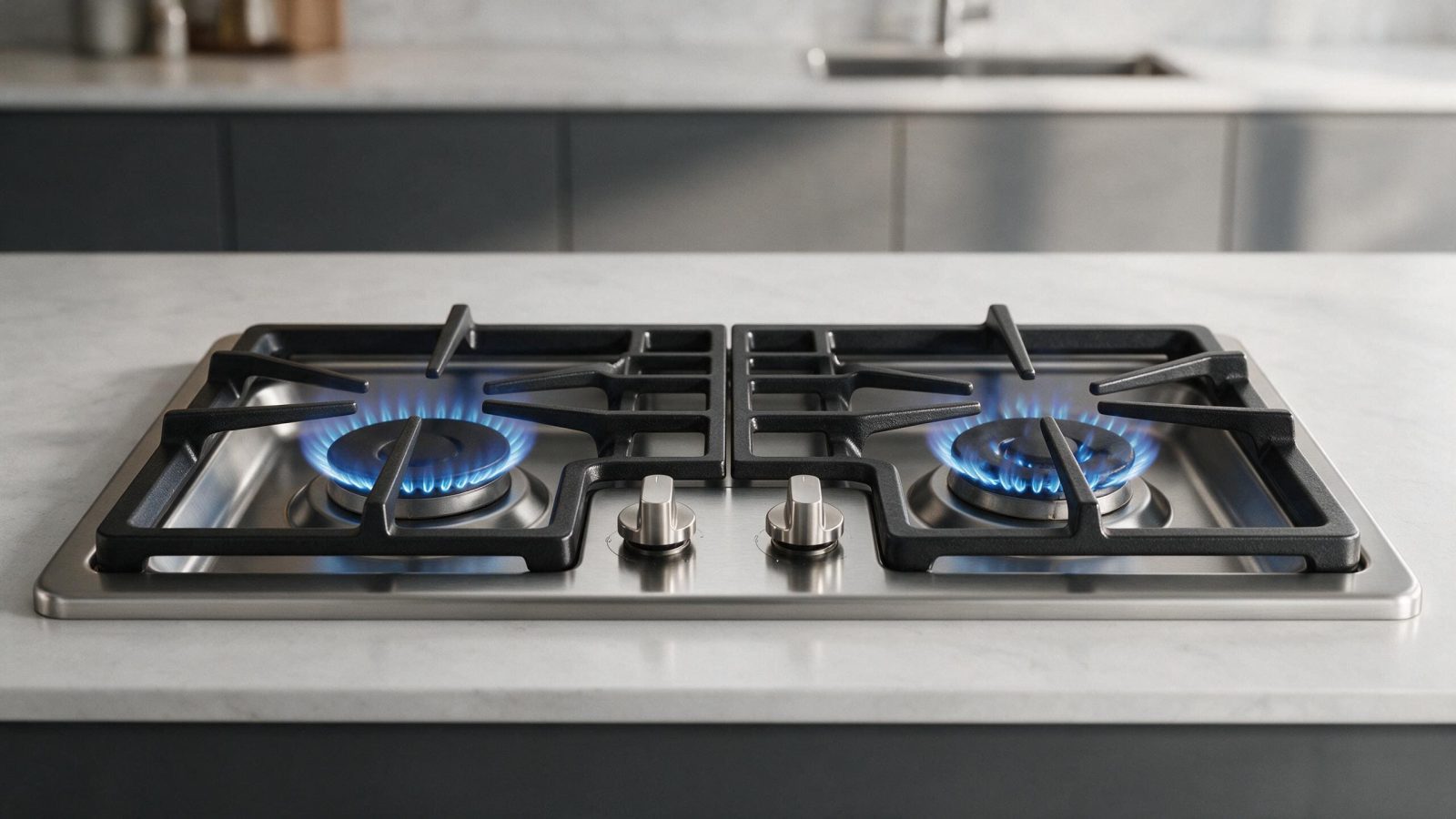
When a Bosch gas burner flame changes, check first whether the burner cap is clean, dry, and seated correctly, because a misplaced cap alone can make flames too high, uneven, or shooting out of the burner. A steady blue flame is the goal. A flame that is mostly yellow, lifting, or unstable after cleaning, or any persistent gas odor, is the point to stop using that burner and book service.
A burner flame that suddenly becomes uneven deserves attention because the pattern can reflect something as simple as a wet or misplaced cap — or something that should not be handled as DIY gas work.
Turn the burner off and wait until removable parts are safe to handle.
The use-and-care manual for one Bosch NGM-series cooktop describes a blue, stable flame that burns completely around the burner cap. It also says yellow tips on the outer cones are normal for LP gas, while soft blue flames are normal for natural gas, so what looks right depends on the fuel your cooktop is set up for. Some yellow streaking is described as normal in the first several minutes after start-up. Check your own manual, since details vary by model.
If the model uses removable burner caps or heads, make sure they are:
Use the owner instructions for cleaning.
Do not enlarge ports with needles, drills, or wire.
Caps and bases are matched by size, and the manual for that cooktop labels them by size letter. A cap placed on the wrong base, or sitting slightly off, can cause flames that are too high, that shoot out of the burner, or that light unevenly. After cleaning, that is the first thing to recheck.
| Flame behavior | What it can point to | What you can safely check |
|---|---|---|
| Soft blue, steady flame | Normal appearance on natural gas, according to the manual for one model | Nothing to fix; confirm your fuel type in the manual if you are unsure what to expect |
| Yellow tips on the outer cones | Described as normal for LP gas in the manual for one model | Compare with the flame description for your fuel in your manual |
| Brief yellow streaks right after lighting | The manual says some streaking is normal during the first minutes of start-up | Watch whether it clears as the burner warms up |
| Mostly or completely yellow flame | The manual says this calls for adjustment and for checking the regulator is set for the correct fuel | Turn the burner off; this is not a DIY adjustment |
| Tall, uneven, or shooting flame on one burner | A cap or base that is out of position or wet | Cool the cooktop, then dry the parts and reseat the cap by its size letter |
| Every burner changed at once | A shared condition such as the gas supply | Compare all burners and stop use if odor or instability is present |
If one burner has changed but others remain stable, record that.
If every burner changed at the same time, household gas supply or another shared condition may be relevant.
Yellow tips on a single burner can be a normal look for the fuel. A flame that is mostly or completely yellow is a different matter. The manual for one model ties it to adjustment and to the regulator being set for the correct fuel, and neither of those belongs to an owner with a screwdriver. If the cap is clean, dry, and correctly seated and the flame stays mostly yellow, leave it for a technician.
A flame that lifts, goes out, flares unusually, or is difficult to control deserves more attention than a minor visual difference.
Persistent gas odor is an immediate reason to stop.
If the burner returns to normal after drying and correct assembly, continue to monitor it.
If the pattern remains abnormal, internal gas-valve, ignition, or supply diagnosis is not a homeowner task.
A burner that has just been washed can behave oddly until parts dry. The manual for a Bosch gas cooktop also says a damp, damaged, or dirty igniter can prevent a burner from lighting, and it describes cleaning the igniter gently with a damp cotton swab, avoiding excess water, with the cooktop cool. That relates to lighting rather than flame shape, but a wet area near the burner can affect both.
Flame appearance alone does not tell you the gas pressure, the regulator condition, or whether combustion is complete. It only tells you something has changed. That is why persistent odor, a lifting flame, or one that will not stay stable sets the stopping point, whatever color the flame is.
Use Bosch Gas Burner Clicks but Won’t Light: Safe External Checks and Bosch Cooktop Repair for persistent burner problems.
Yes, residue or cap position can disturb the normal pattern.
No.
Some patterns can affect combustion or stability. If the flame is unstable or there is gas odor, stop use.
No. Yellow tips on the outer cones are described as normal for LP gas, and brief yellow streaking at start-up is described as normal for a few minutes. A flame that stays mostly yellow is the one that needs attention.
Moisture or a cap that was put back out of position are the first things to recheck. Let the parts dry and reseat each cap on its matching base.
Stop if there is a persistent gas odor, if the flame lifts, goes out, or flares unusually, or if the flame is still mostly yellow after correct cleaning and assembly. If you smell gas, leave the area and contact your gas utility’s emergency line.
Uneven Bosch oven baking can involve rack position, pan material, airflow, heating, sensing, or control. Build a repeatable comparison first.
A Bosch dryer that needs two cycles can have airflow, load, program, heating, sensing, or condensation problems. Identify the dryer type first.
A Bosch washer leak is easier to diagnose when you record its location and cycle timing before moving or opening the appliance.
Share a few details and we’ll confirm an appointment. Prefer to talk? Call us and we’ll help right away.
Use the secure scheduler below to request your appointment.