Uneven Bosch oven baking can involve rack position, pan material, airflow, heating, sensing, or control. Build a repeatable comparison first.
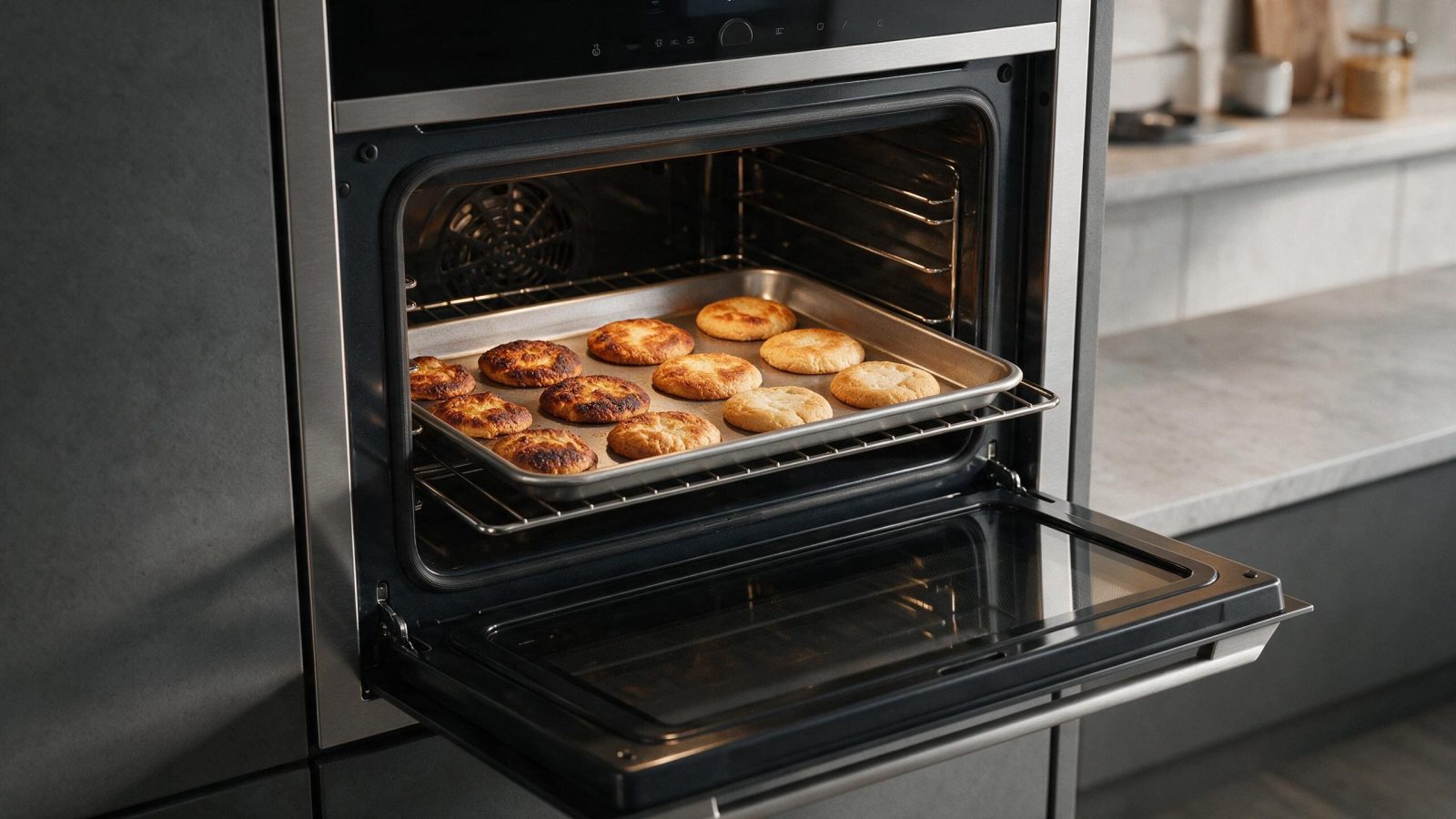
Uneven browning in a Bosch oven often comes down to rack position, pan size, or how crowded the rack is, so test those before suspecting a part. Repeat the same bake with one variable changed at a time, and book service only if the same pattern keeps showing up under controlled conditions.
Uneven browning is visible, but one tray of food is not a calibrated temperature test.
Before assuming a sensor or heating element failed, build a repeatable comparison.
Compare:
Changing all of those at once makes the result difficult to interpret.
| What you see | What it can point to | What you can safely check |
|---|---|---|
| Back or one side browns first | Pan placement, a crowded rack, or airflow around the pan | Center the pan, leave space around it, and repeat the bake in the same position |
| Tops brown but bottoms stay pale | Rack too high for the food, or a pan that shields the bottom | Compare the manual’s rack guide with where you placed the food |
| Two-rack bake finishes unevenly | Pans stacked directly above each other or racks too close | Stagger the pans and use the rack positions the manual lists for multiple racks |
| Everything is too dark or too light | Overall temperature, not just airflow | Check the mode, the recipe temperature, and the convection setting before testing temperature |
Oversized pans, foil placement, and tightly packed racks can change airflow.
Follow the oven manual for rack position and pan clearance. On the Bosch 800 Series built-in ovens, the manual numbers rack positions 1 to 6 from bottom to top and says never to use the top guide to hold a rack.
The Bosch 800 Series manual gives a rack guide by food type. Position 3 is listed for most single-rack baked goods such as cookie sheets, cakes, casseroles, and frozen pizza. Position 2 is listed for small roasts or poultry, bundt cakes, pies, and breads, and position 1 for large roasts, turkey, and angel food cake. If your food sits well above or below the position listed for it, browning will look uneven even when the oven is working as designed.
The same manual asks for at least 1 to 1 1/2 inches of air space around a pan when baking more than one pan on a rack, and says to stagger pans so one is not directly above another. These are model-specific instructions, so check the use-and-care manual for your exact oven.
If you normally rotate food, note whether one area consistently browns faster before rotation. Keep that note simple, such as which side or corner browned first, so the next test can be compared with it.
A repeatable hot or cool zone across several comparable tests is more useful than one uneven batch.
On the Bosch 800 Series manual, Convection Bake works like Bake, with heat from the upper and lower elements, but a fan circulates that heat through the oven. Convection Multi-Rack adds a third element behind the back wall and is described as suited to cookies and biscuits and to cooking on two or three racks at once. A recipe written for regular Bake can brown differently in a convection mode.
The manual says Convection Bake and Convection Multi-Rack need a temperature 25 F lower. Auto Convection Conversion does this automatically, but its factory default is off, and it can be switched in the Settings menu. If it is off, you reduce the recipe temperature yourself, and forgetting to do so is a simple way to get food that browns too fast.
The manual for one Bosch gas range lists rack positions 2 and 5 for two racks and 1, 3, and 6 for three racks in convection bake. Treat that as a model-specific example rather than a rule for every oven.
Ovens cycle around the setpoint.
If temperature accuracy is part of the complaint, use Bosch Oven Temperature Seems Wrong: How to Test a Cycling Oven.
A repeatable uneven pattern can involve:
Those need model-specific testing.
The Bosch 800 Series manual says preheat is used for Bake, Convection Bake, Convection Multi-Rack, Pizza, Broil, Convection Broil, and Warm, and not for Roast, Convection Roast, or Proof. It also says preheating is not necessary for meats, poultry, casseroles, and frozen foods. If food goes in before the oven has finished preheating, the first minutes can brown it differently from a later test, so a fair comparison starts the food at the same point each time.
The manual adds that setting a higher temperature does not shorten preheat time. For a repeatable test, set the temperature you actually want and wait for the oven to signal that preheat is done. Fast Preheat is available for some modes but not for Broil, Convection Broil, Proof, or Warm, so a broil test needs a different approach than a bake test.
Because manuals differ by model, the exact numbers here come from the 800 Series and one gas range manual. Use the document for your oven when you decide what is normal.
Use Bosch Oven Repair when the problem remains repeatable under controlled conditions.
No.
Pan material and finish can affect cooking results.
Measure a consistent temperature pattern before changing calibration.
Not by itself. On the Bosch 800 Series manual, the fan cycles on and off in Pizza mode, and on some models the fan also runs during preheat in bake mode, which one range manual calls normal. Check your own manual for what your modes are expected to do.
The offset changes overall oven temperature, so it fits food that is consistently too brown or too light, not a hot corner. On some Bosch models, per the use-and-care manual, it is set with the oven off, and the adjustment range differs between manuals. Confirm the setting in your manual before changing anything.
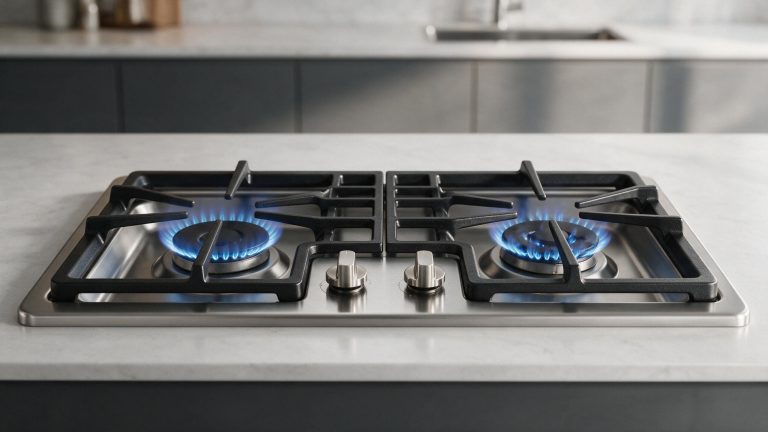
A changed Bosch gas flame can involve burner cleanliness, cap position, moisture, or a gas/combustion condition. Use only safe external checks.
A Bosch dryer that needs two cycles can have airflow, load, program, heating, sensing, or condensation problems. Identify the dryer type first.
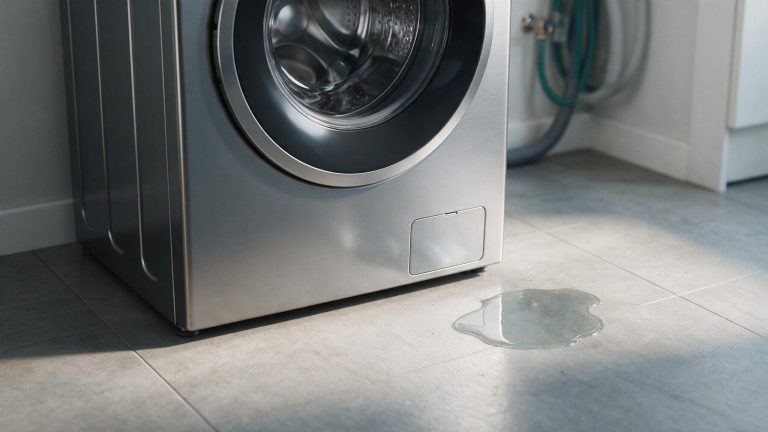
A Bosch washer leak is easier to diagnose when you record its location and cycle timing before moving or opening the appliance.
Share a few details and we’ll confirm an appointment. Prefer to talk? Call us and we’ll help right away.
Use the secure scheduler below to request your appointment.