Bosch ice-maker troubleshooting starts by separating freezer temperature, water supply, and ice-system behavior before parts are blamed.
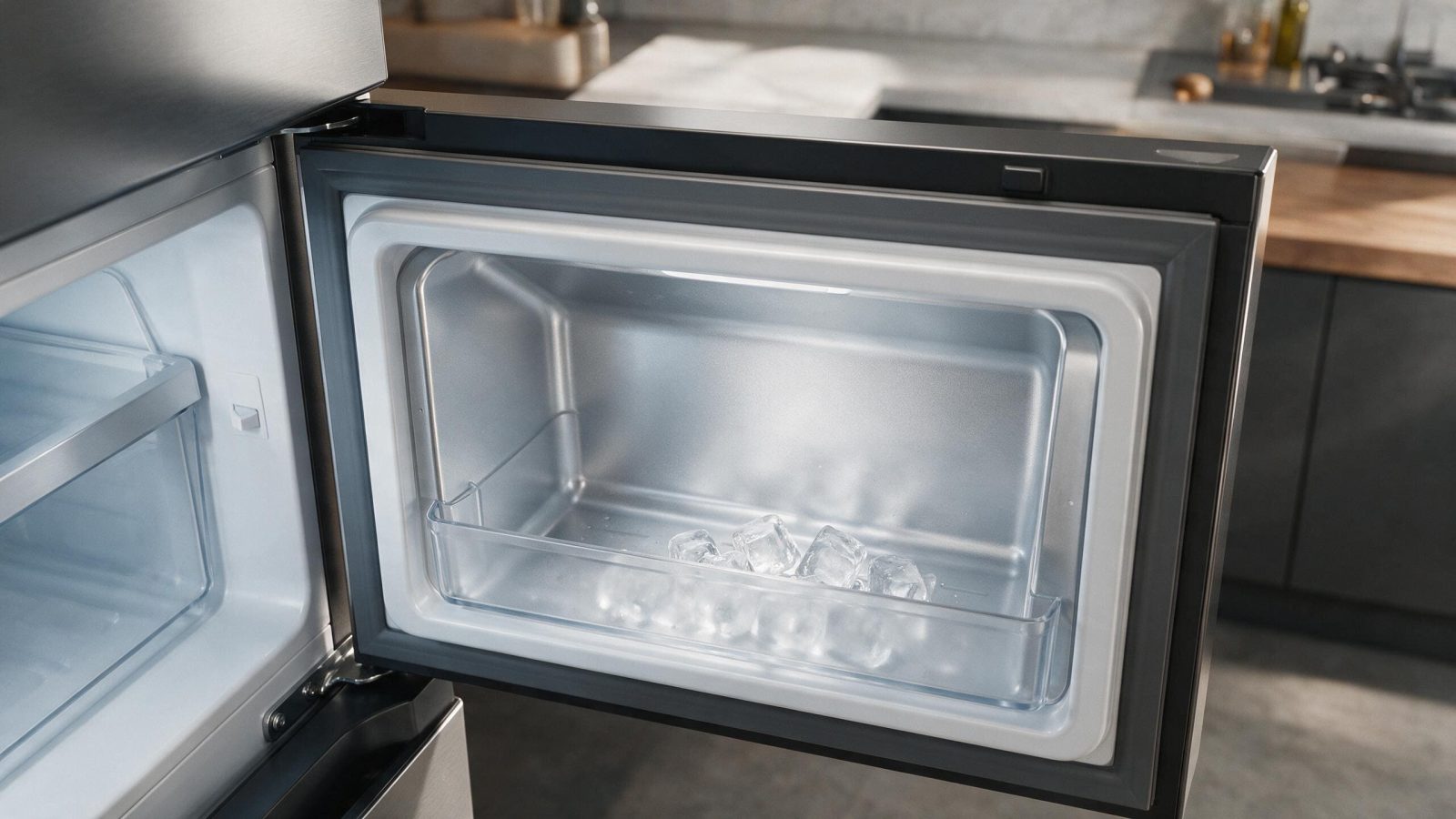
When a Bosch ice maker stops producing ice, check the freezer temperature first, then whether the dispenser still gives water, whether the ice bin is seated, and whether the ice function is switched on. Ice depends on cold, water, and timing together. If the freezer is cold, water flows, and ice still does not come, book diagnosis.
An empty ice bin does not automatically mean the ice-maker mechanism failed. Ice production depends on cold temperature, water supply, timing, sensing, and model-specific controls.
| Symptom | What it can point to | What you can safely check |
|---|---|---|
| No ice and the freezer is warm | A broader cooling problem showing up in the ice maker | Measure the freezer temperature and use the cooling article first |
| No ice and no water from the dispenser | A shared water supply condition | Check the supply valve and any kinked line you can see |
| No ice but water flows normally | A problem specific to ice production | Check that ice is switched on and the bin is seated |
| Ice stopped after a filter change | Filter installation or first-use behavior | Confirm the filter is fully seated and review the manual |
| Ice stopped after a power interruption | Temperature recovery period | Give the freezer time to reach its set temperature |
If the freezer is warmer than normal, the ice problem may be a symptom of the broader cooling condition.
The manual for one Bosch refrigerator says the ice maker starts when the set temperature is reached, makes about 2.8 to 3.3 lb of ice in 24 hours, and stops when the bin is full. Those details explain why an empty bin looks different on a freezer that has just been switched on or recovering from a power loss, and why a full bin is a reason for ice to stop, not a fault.
The manual for a different Bosch dispenser model says that after switch-on, the first ice takes about 24 hours. A newly installed or restarted refrigerator therefore does not tell you much until that time has passed. Your own manual gives the numbers for your model.
Measure the freezer temperature and note whether frozen food is also softening. If core cooling is weak, use Bosch Refrigerator Running but Warm? Build a Better Cooling Check before focusing only on the ice maker.
On a model with a water dispenser, note whether normal water flow is still available.
If both water dispensing and ice production stopped at the same time, that is useful evidence. If water works normally but ice does not, the diagnostic path can be different.
The first manual also says that a motor sound after about two hours is the water valve, which means the ice maker can make a sound without ice appearing right away. Hearing it suggests the water path is being called on, but it does not prove ice will form.
For no-ice complaints, the same manual lists these checks: the ice maker is on, the water supply is open, the line is not kinked, the pressure is not low, and the ice box is in its proper position. That list covers items you can see without opening anything, which is why it appears in the article above as visible clues.
Without forcing motorized parts, check:
Do not pry a frozen tray, force a motor, or apply direct heat to the ice-maker assembly.
After a power interruption, filter change, or empty bin, ice production may not look immediate. Record how long the condition has persisted.
The manual for that model also says to rinse the ice cube box in warm water below 140 F with no detergent and to dry it fully. A box that is washed with detergent or not dried may leave residue or stick, so cleaning is a maintenance step with its own limits.
Arrange diagnosis when freezer temperature is normal but ice production remains absent, a tray/motor repeatedly fails to cycle, water leaks, a related code appears, or the same symptom returns after normal user checks.
Use the exact model/E-Nr because Bosch ice systems differ across refrigerator families.
For repair, use Bosch Refrigerator Repair.
No. It only confirms part of the water path.
Do not apply uncontrolled heat to plastic, wiring, or sensors.
The manual for one Bosch dispenser model says the first ice takes about 24 hours after switch-on. Check your own manual, because models differ.
That is normal. The manual for one Bosch refrigerator says the ice maker stops when the bin is full, and it makes ice again when the level drops. Seating the bin properly also matters.
For one Bosch refrigerator, the manual ties a motor sound about two hours after filling to the water valve. It indicates a valve opening, not a confirmed ice cycle, so keep watching whether ice appears.
Model/E-Nr, freezer temperature, whether water dispenses, any code, and a photo of the ice bin or display if helpful.
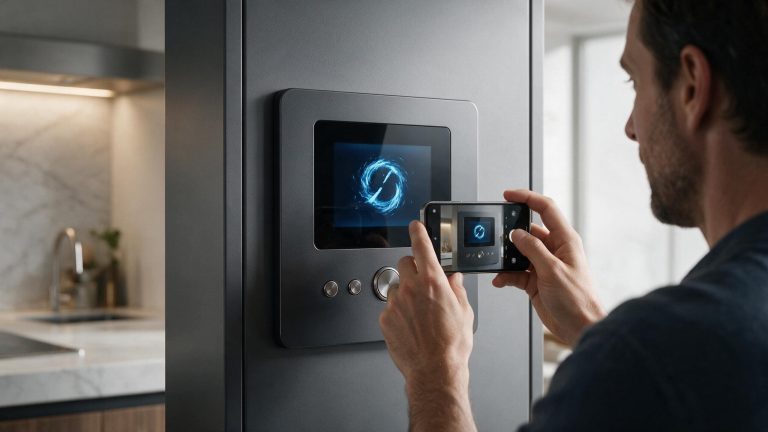
A Bosch error code is most useful when you save the exact display, appliance type, model, cycle stage, and symptoms before resetting.
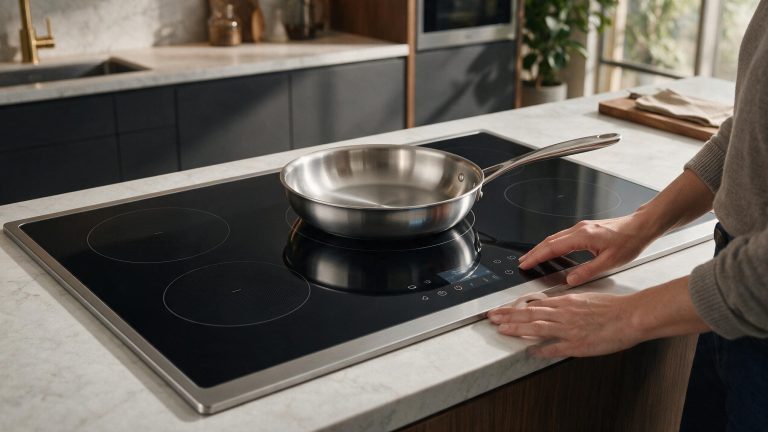
A Bosch induction zone that does not detect cookware should be tested with a known-compatible pan before power electronics are blamed.
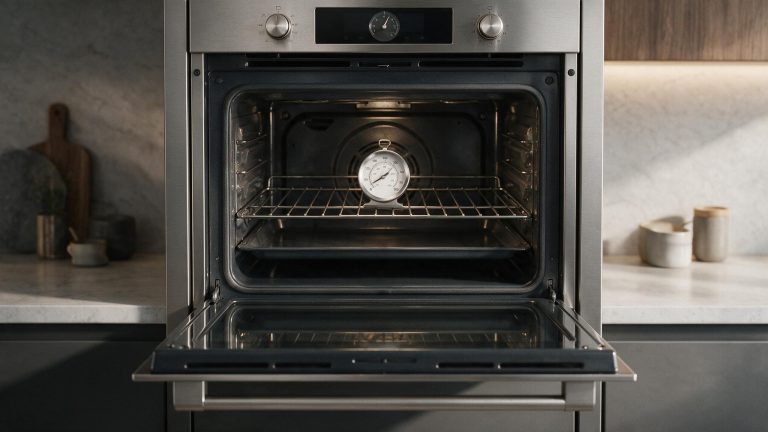
A Bosch oven cycles around its setpoint, so one thermometer reading can be misleading. Compare a stable pattern before adjusting calibration.
Share a few details and we’ll confirm an appointment. Prefer to talk? Call us and we’ll help right away.
Use the secure scheduler below to request your appointment.