Recurring Bosch freezer frost usually means moisture keeps reaching a cold surface. safe checks for doors, loading, and patterns.
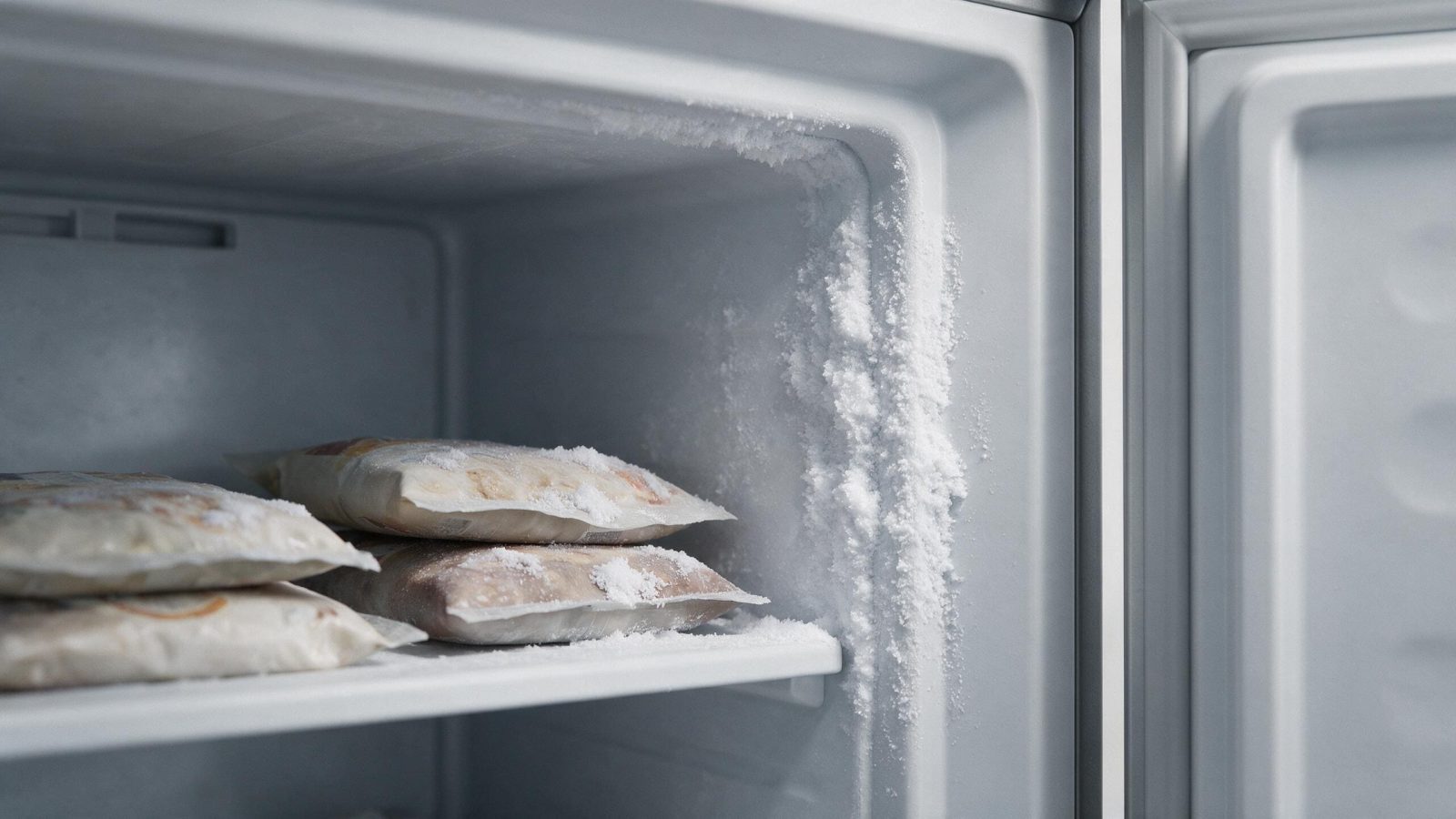
Recurring frost in a Bosch freezer points to moisture getting in or building up somewhere, so look at the pattern first. Check that the door closes fully, that packages are not holding it open, and that no one used a setting that changed the freezer temperature. Heavy or fast-returning frost after a proper defrost needs a model-aware diagnosis.
Frost is frozen moisture. When it keeps returning, the useful question is where that moisture is coming from and why it is reaching a surface cold enough to freeze.
| Symptom | What it can point to | What you can safely check |
|---|---|---|
| Light film after long door opening | Humid air entering during access | Close the door fully and see whether the film returns |
| Frost along the door edge | Door closure, gasket debris, or loading | Clear packages from the door path and wipe the visible gasket |
| Thick frost in one spot, repeatedly | A persistent moisture path or airflow issue | Compare the spot after a proper defrost |
| Frost with rising freezer temperature | A broader cooling concern | Measure temperature and compare with the setting |
| Frost after a power interruption | Temperature recovery or readjustment | Check the setting and give the freezer time to stabilize |
A light temporary film after extended door opening is different from thick frost that repeatedly builds in the same place.
Photograph the pattern before removing it. Note whether it is:
The location can help distinguish door-sealing, airflow, defrost, and drainage paths.
Frost forms when water vapor reaches a surface cold enough to freeze. In a freezer that vapor comes from air that enters when the door is opened, from food that is not covered, and from any gap where the door does not close fully. Each of those has a different fix, which is why the location of the frost matters more than the amount.
The manual for one Bosch refrigerator describes a door alarm that sounds after the door has been open for more than one minute and repeats every 60 seconds for 5 minutes. If the alarm has sounded, the door may have been left ajar, and a one-time cause of frost is different from a recurring one.
Make sure packages or bins do not prevent the door from closing fully.
Clean visible gasket debris. Do not assume the gasket is the cause simply because frost is near the front; alignment and loading can also matter. Gasket debris can keep a door from closing flush, so cleaning it is a reasonable first step.
A knife or screwdriver can damage liners, tubing, or hidden components.
If defrosting is required by the owner manual, follow the model procedure and protect food safely. If frost returns quickly after a proper defrost, the recurrence is the important evidence.
The manual for one Bosch refrigerator lists a factory freezer setting of 0 F, with a range from 9 F to -8 F, and says to allow several hours before loading food after a change. It also describes Super Freeze, which sets -8 F for up to 6 hours, and Eco Mode, which sets 5 F for vacations. A freezer that was set to Eco Mode or left on a different setting will not behave like one at the default.
After a power failure, the same manual says the fresh food compartment temperature must be readjusted. Check your own manual for how your model handles this.
Measure the freezer temperature. Frost plus rising temperature can point to a different level of urgency than frost with otherwise stable cooling.
Also note new fan noise. Ice contacting a fan can create a repeating scrape or buzz.
Do not block air outlets with packages. The air path the model uses to circulate cold air needs to stay open, and frost that concentrates near an outlet can point to loading as well as to a component.
Recurring heavy frost can involve door sealing, defrost heating, sensing, drainage, airflow, fans, or controls. Those systems need model-specific diagnosis once the external checks are exhausted.
Use Bosch Refrigerator Models and Bosch Refrigerator Repair rather than ordering a defrost component from the frost pattern alone.
Frost that appears together with a rising temperature reading, a repeated alarm, or water elsewhere in the cabinet carries more weight than frost alone. Reporting those combinations helps service separate a one-time moisture event from a recurring condition.
A photo of the frost pattern before cleaning is useful for service.
No. Small temporary frost can follow humid air entering during door opening. Heavy or recurring buildup deserves attention.
Follow only the model-approved defrost procedure. Uncontrolled heat can damage the appliance.
Not automatically.
Yes. Air entering during door openings adds moisture that can freeze on cold surfaces. Frost that returns quickly even with normal use is the pattern worth reporting.
The manual for one Bosch model describes a door alarm after the door is open more than one minute. An alarm that sounded earlier suggests the door was open long enough to let humid air in.
One Bosch manual describes Super Freeze as setting -8 F for up to 6 hours. It is a temporary setting, so compare the freezer after it ends before drawing conclusions.
A changed Bosch gas flame can involve burner cleanliness, cap position, moisture, or a gas/combustion condition. Use only safe external checks.
Uneven Bosch oven baking can involve rack position, pan material, airflow, heating, sensing, or control. Build a repeatable comparison first.
A Bosch dryer that needs two cycles can have airflow, load, program, heating, sensing, or condensation problems. Identify the dryer type first.
Share a few details and we’ll confirm an appointment. Prefer to talk? Call us and we’ll help right away.
Use the secure scheduler below to request your appointment.