Wet dishes after a Bosch dishwasher cycle can depend on material, loading, cycle choice, drying system, or a real heating/drying fault.
Wet dishes after a Bosch dishwasher cycle often come from how Bosch dries, not from a failed heater. Bosch dishwashers dry by condensation, so plastic, recessed items, and a missing rinse aid change the result. Compare materials, loading, program, and rinse aid first, and book service if drying changed suddenly across comparable loads.
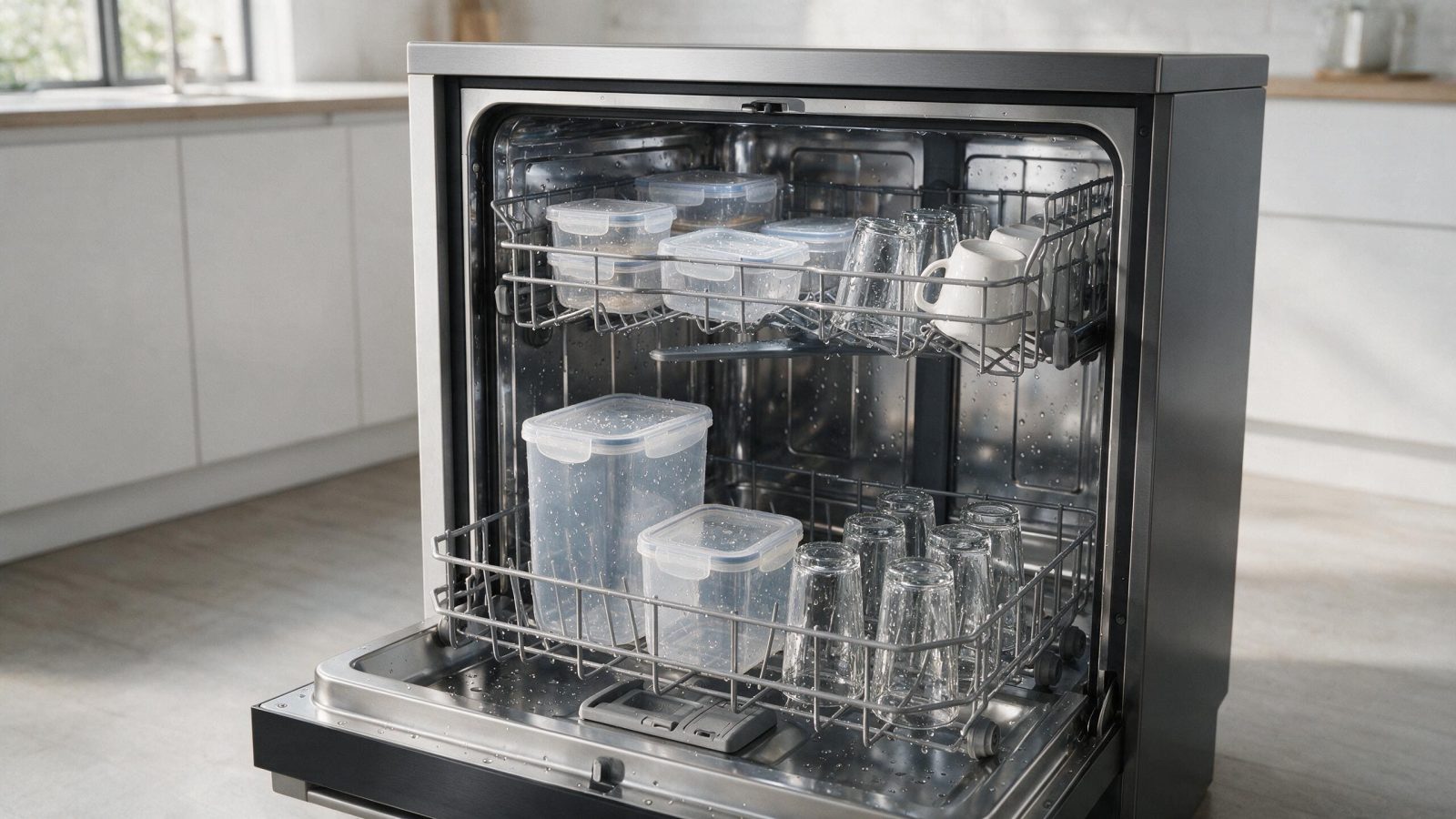
Wet dishes do not all mean the same thing. Plastic containers often hold water differently from glass, ceramic, and metal because they cool quickly and have shapes that trap droplets.
The useful question is whether drying performance changed from the dishwasher’s normal baseline.
| Symptom | What it can point to | What you can safely check |
|---|---|---|
| Plastic wet, glass and ceramic dry | Material behavior with condensation drying | Compare the same load on a program you know well |
| Water pooled in cups and bowls | Loading angle or recessed shapes holding water | Tilt items so water can run off and check the spray path |
| Streaks or spots plus damp dishes | No or too little rinse aid | Check the rinse aid dispenser level and setting |
| Dishes cold at the end of the cycle | A short or no drying stage, or a heating-related issue | Compare with the previous program and look for a code |
| Droplets on the tub walls | Normal condensation drying | Nothing to fix; the water runs off and is pumped out |
Begin by comparing like with like. A cold plastic container loaded next to a hot glass will always finish differently, so test with a load you have dried successfully on that program before.
If glassware is dry but lightweight plastic remains wet, the dishwasher may be behaving differently than a machine where every item is cold and soaked.
Note which materials are affected.
Bosch US support says all of its dishwashers use condensation drying. The final rinse heats the dishes, and the cooler stainless-steel tub makes moist air condense and drain away. That is why plastic, which holds less heat, can stay wetter than glass or ceramic, and why droplets on the tub walls after a cycle are part of the design.
The use-and-care manual for one Bosch model says a wet tub interior after the cycle is not an error. It describes droplets running off the walls and being pumped out. Some models use Zeolite drying, where moisture is stored in a mineral and heat is released during drying, and the manual says not to place dishware directly in front of the Zeolite container intake or outlet openings. Another option on that model, CrystalDry, extends drying time. Whether your model has these depends on the model, so confirm the drying features in your own manual before concluding something is missing.
Programs can differ in temperature and drying behavior, which is why switching programs can change how dry the dishes are. If a program that includes drying behaves differently than it used to with a comparable load, that is the pattern to describe when you book service.
Cups and bowls that hold pools of water can remain visibly wet even when the dishwasher completed a normal drying stage.
Load items so water can drain from recessed surfaces and so large pieces do not block normal spray or airflow paths.
The rinse aid dispenser on that model has settings from r:00 to r:06, with r:05 as the factory setting and r:00 turning the system off. The manual says lower settings reduce streaking and higher settings reduce spots and improve drying. Because the dispenser is a setting, it is worth checking before assuming a hardware fault.
The same manual lists several causes for dishes that are not dry: no or too little rinse aid, a cycle with no or short drying, water pooling in recesses, a poorly drying combination detergent, or removing dishes too early. It advises waiting 30 minutes after the program ends before unloading.
Different programs can use different wash temperatures and drying behavior.
If the complaint started after switching to a different program, compare the original cycle under a similar load.
Drying problems deserve more attention when they appear with:
Use Bosch Dishwasher Error Codes if the machine reports a warning.
A dirty filter can affect water movement and overall cycle performance, but cleaning it is not a universal cure for a drying complaint.
Use How to Clean a Bosch Dishwasher Filter Without Turning Maintenance Into Repair for the maintenance step.
If drying changed suddenly and remains poor across comparable loads, request Bosch Dishwasher Repair.
Plastic commonly retains surface water differently from glass or ceramic. Compare the whole load and previous performance.
Use the product and dispenser settings described for the exact dishwasher model.
Not automatically. Cycle behavior, loading, material, heating, sensing, and model-specific drying systems can all matter.
That is normal on Bosch dishwashers that use condensation drying. The water condenses on the cooler tub walls and drains away. It is different from water pooled in the bottom of the tub.
One Bosch manual advises waiting 30 minutes after the program ends. That gives the remaining moisture time to condense and run off.
On one Bosch model, lower settings reduce streaking and higher settings reduce spots and improve drying. The factory setting on that model is r:05, and your manual shows what your dispenser offers.
A changed Bosch gas flame can involve burner cleanliness, cap position, moisture, or a gas/combustion condition. Use only safe external checks.
Uneven Bosch oven baking can involve rack position, pan material, airflow, heating, sensing, or control. Build a repeatable comparison first.
A Bosch dryer that needs two cycles can have airflow, load, program, heating, sensing, or condensation problems. Identify the dryer type first.
Share a few details and we’ll confirm an appointment. Prefer to talk? Call us and we’ll help right away.
Use the secure scheduler below to request your appointment.