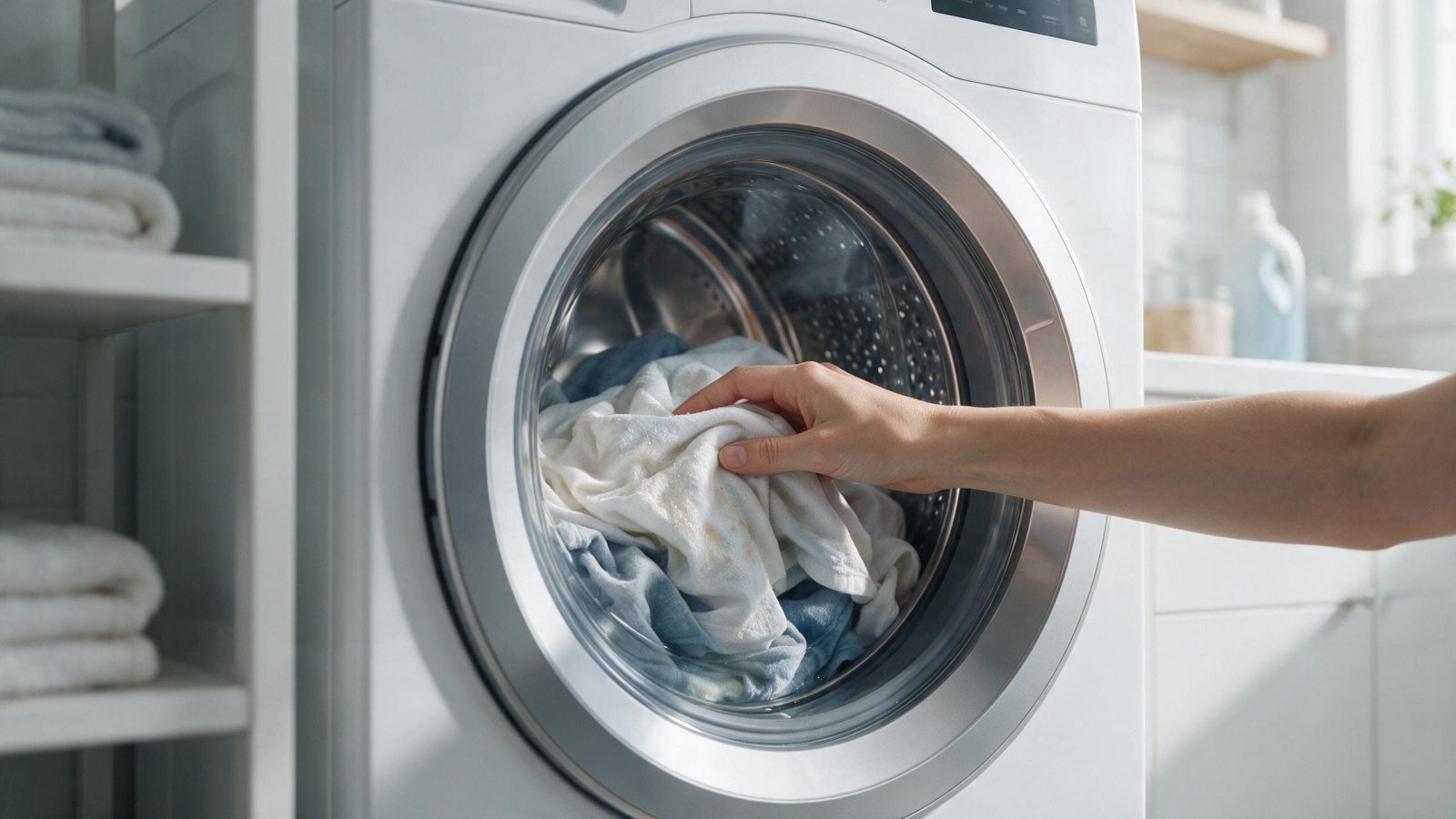
A Bosch dryer that needs two cycles can have airflow, load, program, heating, sensing, or condensation problems. Identify the dryer type first.
When a Bosch dryer needs two cycles, the useful split is heat versus moisture removal: a warm drum with damp laundry points to airflow, condensation, sensing, load, or program conditions, while a cold drum points to the heating path. Confirm the dryer design first, clean what the manual says is user-serviceable, and compare the same load on the same program. If it stays slow after that, request diagnosis.
Long drying time is often described as a heating problem, but a dryer can produce heat and still remove moisture poorly.
The first step is to identify the dryer design.
Some Bosch compact dryers use condensation or other ventless systems. Advice about an external exhaust duct does not apply to every model.
Check the model/E-Nr and owner manual.
The manual for one Bosch dryer says automatic programs are controlled by sensors, and that the running time depends on the moisture measured in the laundry and the dryness level you selected, such as Cotton Dry. So two loads on the same program can end at very different times, and a changed dryness setting changes the result.
The same manual describes a stainless-steel moisture sensor, two bars next to the lint filter, that can pick up a film of limescale or detergent residue, which can impair drying. It says to wipe the bars with a cloth and a little white vinegar once a month, and the Bosch US support page says to unplug the dryer before cleaning the sensor. If a program ends with clothes still damp, the sensor and the dryness setting are fair places to look.
A very large or dense load can take longer to dry even when the machine is operating correctly.
Compare similar loads and the same program.
| What you notice | What it can point to | What you can safely check |
|---|---|---|
| Drum warm, laundry damp at the end | Airflow, condensation, sensing, load, or program conditions | Clean the user-serviceable filters, then compare the same load and program |
| Drum stays cold | The heating path deserves more attention | Stop repeated cycles and request diagnosis |
| Automatic program ends with damp clothes | The moisture sensor or the dryness level selected | Check the dryness setting and, per the manual, wipe the sensor bars after unplugging the dryer |
| Drying slower in a cold room | The manual for one model lists 41 to 95 F as the recommended range and says low temperatures may prolong drying | Consider where the dryer is installed |
| Slow drying with the front air inlet blocked | The manual for one model lists an obstructed inlet at the front as a cause of long drying time | Make sure nothing blocks the front of the dryer |
| Program stopped after a power cut | The manual for one model says the dryer does not resume after an interruption | Confirm the program and press Start/Pause again |
Clean the lint filter after each load and maintain any additional filter, condensation, or heat-exchanger area the exact model identifies as user-serviceable.
Do not remove service panels.
On a condensation model the manual for one dryer adds a heat exchanger that needs periodic cleaning, recommended once per month under normal conditions, and says a long drying time can mean the lint filter, the heat exchanger, or both are dirty. It also says that a lit DR indicator means water has not drained completely, so check the drain hose for kinks or blockage.
After a reasonable operating period, is the drum warm?
If the drum is warm but laundry remains damp, airflow, condensation, sensing, load, and program conditions become important.
If the drum remains cold, the heating path may deserve more attention.
Two things outside the machine can slow a healthy dryer. The same manual lists an ambient temperature above 95 F or an obstructed air inlet on the front as possible reasons for a long drying time, and it says low temperatures can also prolong drying. A dryer in a closet, a cold garage, or a tight alcove is worth a second look before assuming anything has failed.
These are installation conditions rather than faults, so they are cheap to rule out before booking.
Bosch dryer codes can identify heating, sensor, airflow, water-handling, compressor, drive, and control conditions depending on the platform.
Use Bosch Dryer Error Codes before resetting the display repeatedly.
A lit lint filter indicator is another documented stop: the manual for one model says the program interrupts and the filter should be cleaned immediately. Restarting without cleaning can repeat the stop.
Leave the dryer off for overheating, smoke, electrical odor, repeated breaker trips, or severe mechanical noise.
Request Bosch Dryer Repair when the same load/program remains consistently slow after correct user maintenance.
Not necessarily.
Only if your exact dryer uses one.
Sensor conditions can affect automatic programs, but the exact model needs diagnosis.
On automatic programs the dryer ends based on measured moisture and the dryness level you picked, so a low dryness setting or a film on the moisture sensor can end the cycle early. Compare the same load with a higher dryness level.
It can. The manual for one Bosch dryer lists 41 to 95 F as the recommended range and says low temperatures may prolong drying times.
The manual for one dryer says it does not resume after a power interruption, so confirm the program and options and press Start/Pause again.
A changed Bosch gas flame can involve burner cleanliness, cap position, moisture, or a gas/combustion condition. Use only safe external checks.
Uneven Bosch oven baking can involve rack position, pan material, airflow, heating, sensing, or control. Build a repeatable comparison first.
A Bosch washer leak is easier to diagnose when you record its location and cycle timing before moving or opening the appliance.
Share a few details and we’ll confirm an appointment. Prefer to talk? Call us and we’ll help right away.
Use the secure scheduler below to request your appointment.